
MLB Spring Training Betting: Navigating Exhibition Games
 Available in US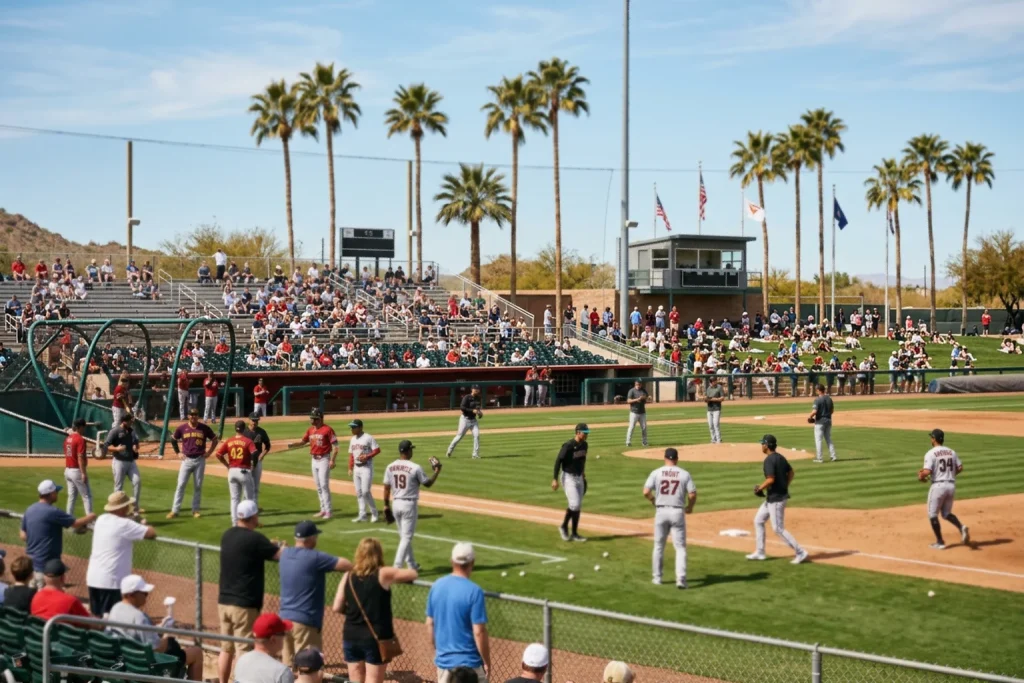
Spring training cost me money for three consecutive years before I finally accepted the truth: these games exist for player evaluation, not competitive outcomes. Teams don’t care about winning exhibition games. Managers rest stars, test prospects, and experiment with strategies regardless of the scoreboard. Once I understood this fundamental disconnect between exhibition baseball and regular season baseball, I stopped treating spring training as a betting opportunity and started treating it as scouting season.
Some bettors claim to profit from spring training, and I’m sure a few actually do. But the structural challenges – random lineups, abbreviated pitching, and zero competitive stakes – make consistent edge extremely difficult to identify. This guide covers what you need to know if you choose to bet spring training: the unique landscape, lineup uncertainty, pitching limitations, totals tendencies, and honestly, when to skip these games entirely. For analysis that matters more, focus energy on the regular season framework at baseball bet of the day.
Spring Training Betting Overview
Spring training games occur during March in Arizona’s Cactus League and Florida’s Grapefruit League. These exhibition contests prepare teams for the regular season through roughly 30 games each over six weeks. Sportsbooks offer lines on most spring games, though limits are significantly lower than regular season caps.
The betting market recognizes spring training’s unique nature through reduced juice and lower maximum bets. Books understand that these games carry substantial unpredictability beyond normal variance, so they limit their exposure. If professional books are cautious about spring training, individual bettors should be equally wary.
Information scarcity compounds spring training challenges. Beat reporters cover camps, but lineup information might not confirm until shortly before game time. Injury updates are less reliable. Player performance data from previous springs offers limited predictive value because roster composition changes annually. You’re betting with less information than any regular season game provides.
Managing Lineup Uncertainty
Spring training lineups bear little resemblance to regular season construction. Teams split squads for doubleheaders. Stars might play three innings then leave for early rest. Minor league prospects might start alongside veterans being evaluated in new roles. The lineup posted two hours before game time might change significantly by first pitch.
Managers explicitly state that spring results don’t matter. Their goal is evaluating talent, building pitcher endurance, and testing new approaches – not winning games. A team might platoon nine players in a single game or give their best hitter three at-bats before replacing him with a non-roster invitee. These decisions destroy any lineup-based analysis.
Late-game substitutions follow evaluation logic rather than competitive logic. A team leading by four runs might insert their worst players to maximize evaluation opportunities rather than protecting the lead. A team trailing might pull its best arms rather than mounting a comeback. Game scripts in spring training don’t follow regular season patterns.
Starter Pitch Count Limits
Starting pitchers work on strict pitch count limits during spring training. Early in camp, starters might throw only 30-40 pitches – roughly two innings. As spring progresses, counts extend toward 80-90 pitches, simulating regular season workloads. But managers strictly enforce limits regardless of game situation.
An ace dominating after three innings might exit because he hit his pitch count target. His replacement might be a fringe roster candidate or a minor leaguer with no MLB future. The five innings after the starter exits often feature arms that wouldn’t make regular season rosters, creating unpredictable scoring patterns.
Bullpen usage follows development priorities rather than leverage situations. High-leverage relievers might pitch in low-leverage spring situations to work on specific pitches. Setup men might face lineups loaded with minor leaguers while closers face MLB regulars in non-save situations. None of this maps to regular season bullpen deployment.
Totals in Exhibition Games
Spring training totals tend to run higher than regular season equivalents due to pitching limitations and defensive experimentation. Games featuring multiple pitching changes and prospects learning positions often see elevated scoring that wouldn’t occur in regular season contexts.
Weather in Arizona and Florida creates generally hitter-friendly conditions during March. Warm temperatures, minimal wind variation, and consistent dry conditions favor offense. However, morning games might see cooler temperatures that suppress scoring relative to afternoon starts in the same location.
The unpredictability of spring pitching makes totals especially difficult to project. A game might feature an ace throwing three shutout innings followed by five innings of batting practice from non-roster pitchers. Or two teams might showcase their best bullpen arms for extended looks, creating unexpectedly low-scoring affairs. The variance overwhelms systematic analysis.
When to Skip Spring Games
The honest answer is that most bettors should skip spring training entirely. The structural challenges – lineup volatility, pitching limitations, and zero competitive stakes – create noise that drowns out any analytical edge. Your time is better spent preparing for the regular season than grinding marginal spring training edges.
If you insist on betting spring training, focus on situations with unusual information advantages. Perhaps you follow a specific team closely enough to anticipate lineup decisions. Perhaps you have insight into which prospects will receive extended looks. Without specialized information, you’re competing in a market designed to resist systematic analysis.
Use spring training for scouting rather than betting. Watch how new acquisitions fit into lineups. Observe which pitchers have refined their approaches. Note which prospects seem ready for MLB roles. This information becomes valuable once the regular season begins and results actually matter.
Frequently Asked Questions
Should I bet on spring training games?
Most bettors should avoid spring training betting. Lineup uncertainty, strict pitching limits, and zero competitive stakes create structural challenges that overwhelm analytical edge. If you bet spring training, do so with minimal stakes and recognize the inherent unpredictability exceeds regular season variance significantly.
How do lineup changes affect spring training bets?
Lineup changes in spring training are frequent and often announced late. Managers prioritize player evaluation over competitive outcomes, leading to mid-game substitutions that follow development logic rather than game situation. Expect starting lineups to change significantly by game"s end regardless of score.
Are spring training results predictive of regular season?
Spring training results have minimal predictive value for regular season outcomes. Different lineups, limited pitching, and exhibition-mindset play create results that don"t translate to meaningful games. Focus spring training attention on scouting and preparation rather than using results for regular season projections.
Spring Training in Context
View spring training as preseason information gathering rather than betting opportunity. The games themselves resist systematic analysis, but the information revealed – lineup construction, pitcher development, prospect readiness – informs regular season strategy. Take notes on what you observe during exhibition play for application once games matter.
Pay attention to roster battles that spring training resolves. The final bench spot, the fifth starter selection, or the bullpen composition question all get answered during March. These decisions affect regular season betting in concrete ways that spring training wins and losses don’t predict. Watch spring training to learn rosters, not to project spring results.
Use spring training to calibrate expectations for teams with significant roster changes. New acquisitions integrating into lineups, changed defensive alignments, and pitching staff reshuffles all become visible during exhibition play. A team that looks cohesive in spring training might outperform expectations while one that shows integration problems might struggle early in the regular season.
Connect spring observations to futures considerations at MLB futures picks. If spring training reveals a breakout prospect or a concerning veteran decline, that information might create futures value before the market fully adjusts. Spring training’s value lies in preparation, not in the games themselves. The teams showing strong spring chemistry and development often become regular season overperformers that futures markets hadn’t fully anticipated.
Articles
Published by the Baseball Bet of the Day team.
