
Baseball Bet of the Day: Expert MLB Picks With Data-Backed Analysis
 Available in US
Data-driven picks from nine years of MLB betting analysis
Start Reading
Baseball Bet of the Day: Expert MLB Picks With Data-Backed Analysis
I lost $1,200 in my first month betting on baseball. Chased favorites, ignored pitching matchups, treated every game like a coin flip with slightly better odds. That was nine years ago. Since then, I've developed a systematic approach to finding one high-value MLB bet each day - and that discipline has transformed my results.
The 2026 MLB regular season offers 2,430 games spread across 26 weeks. That's roughly 15 games every single day, creating a volume of betting opportunities that no other major American sport can match. But volume is both a blessing and a curse. More games means more chances to find value - and more temptation to overbet on mediocre spots.
My approach is simple: quality over quantity. Rather than scattering bets across the entire slate, I focus on identifying one baseball bet of the day that offers genuine edge. Sometimes it's a moneyline underdog where the starting pitcher matchup creates mispriced odds. Other days it's an NRFI play where two dominant starters face weak-hitting lineups. The common thread is always value - situations where the true probability of an outcome exceeds what the odds suggest.
This guide shares the framework I use to select daily MLB picks. You'll learn how I evaluate pitching matchups, identify value in different bet types, and maintain the discipline that separates profitable bettors from recreational gamblers. Resources like FanGraphs and Baseball Savant should be bookmarked during baseball season - if you want to win, learning how to utilize key metrics is essential. Starting pitchers set the tone for a game, so knowing who's on the mound is always the starting point of any analysis.
Whether you're new to baseball betting or looking to sharpen your existing process, this resource provides the foundation for making smarter picks. Let's break down what goes into selecting the best baseball bet of the day.
The Daily Pick Framework at a Glance
- Focus on one high-value baseball bet per day rather than scattering wagers across the slate - the 2,430-game MLB season creates daily opportunities, but discipline beats volume.
- Starting pitcher evaluation drives every selection: FIP and xERA reveal true performance better than ERA, while rest patterns and lineup matchups determine single-game edge.
- Value is the gap between odds-implied probability and your actual assessment - a 55% team at -120 (54.5% implied) offers edge; the same team at -150 (60% implied) does not.
- Unit-based bankroll management (1-2% per bet) protects capital during inevitable losing stretches and allows sustainable growth over 162 games.
- 73% of bettors now participate in props, and first-inning markets (NRFI/YRFI) offer 10-15 opportunities daily - diversification beyond moneylines creates more value spots.
The State of MLB Betting in 2025-2026
Three years ago, a sharp bettor I know told me baseball would become the most important sport for serious bettors. At the time, football and basketball dominated the conversation. Now, looking at the numbers, his prediction seems almost conservative.
Sports betting revenue in the United States hit $16.96 billion in 2025 - a 22.8% increase from the previous year. Americans wagered $166.94 billion total, representing 11% year-over-year growth that shows no signs of slowing down. Bill Miller, President and CEO of the American Gaming Association, put it directly when discussing these record numbers: legal commercial gaming continues delivering exceptional results for consumers, operators, and the communities they serve, with record revenues and tax contributions demonstrating the broad appeal of regulated markets.
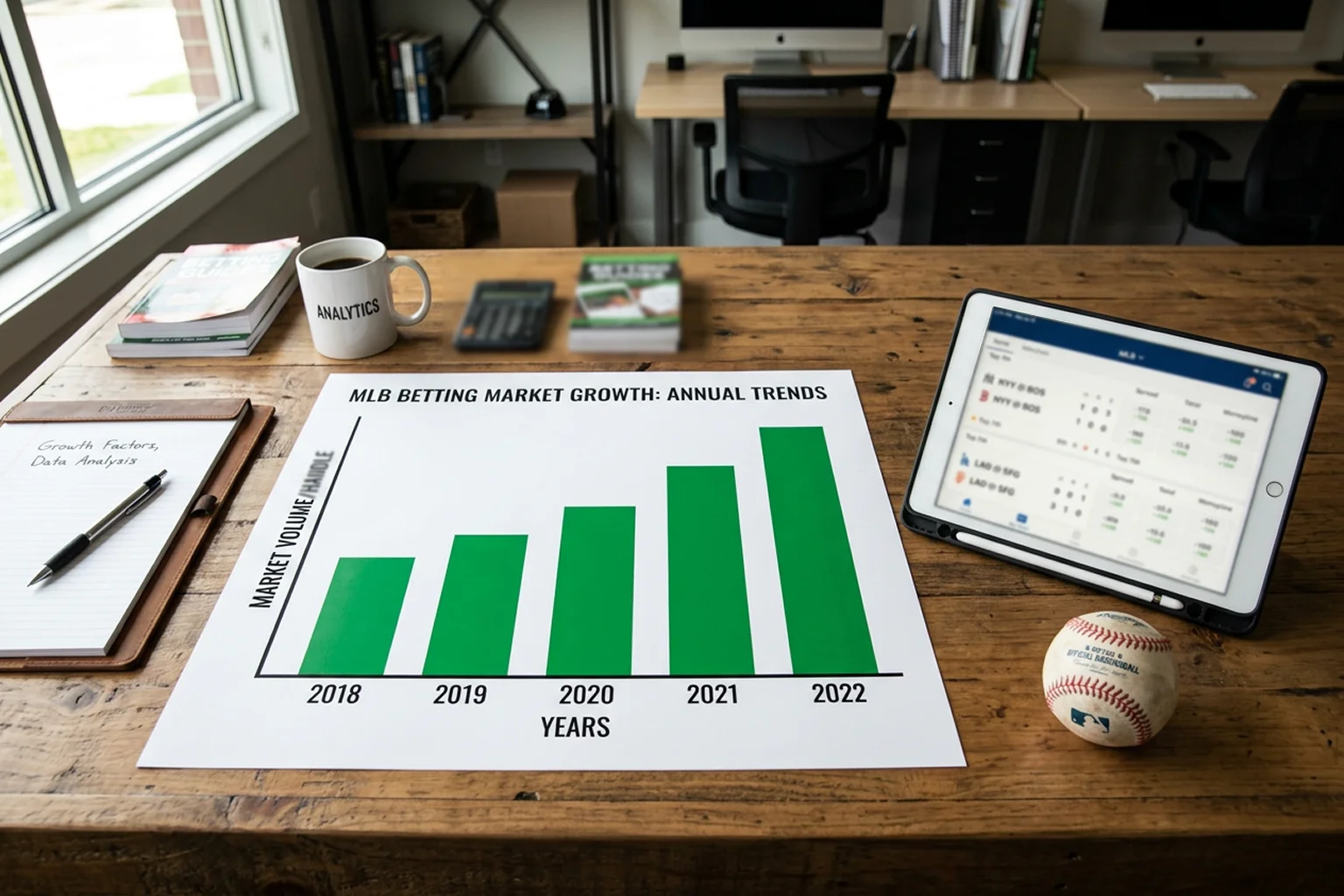
MLB itself posted $12.1 billion in total revenue for the 2024 season - a new league record. That financial health translates directly into what bettors care about: consistent game scheduling, predictable starting rotations, and reliable data. Unlike the NFL's single-game weekly format or the NBA's frequent load management surprises, baseball's daily grind creates a rhythm that rewards disciplined analysis.
The betting landscape has fundamentally changed how we approach the sport. Live or in-play betting now accounts for 62.35% of the overall sports betting market. That statistic matters because it reflects a more engaged, analytically-minded betting public. People aren't just placing pre-game wagers and walking away - they're watching games, tracking developments, and adjusting positions based on real-time information.
For baseball specifically, this shift creates both opportunity and competition. The days of finding obvious value in mispriced lines are mostly gone. Sportsbooks employ sophisticated models, track public betting percentages, and adjust lines quickly. But that efficiency also means that when you do find genuine value - a starter coming off extra rest that the market hasn't fully priced, a bullpen in shambles after a four-game series - the edge is real.
What hasn't changed is the fundamental math of baseball betting. Unlike basketball or football where point spreads dominate, baseball's moneyline-centric market means you can be profitable while hitting less than 50% of your picks - as long as you're selective about price. That's the core principle behind the baseball bet of the day approach: finding spots where the risk-reward ratio genuinely favors the bettor.
How We Select Today's Best Baseball Bet
Every morning during baseball season, I pull up the day's slate around 9 AM Eastern. By then, most starting lineups are confirmed, weather forecasts are reliable, and early line movement has settled. What follows is a systematic review that usually eliminates 80% of games within the first 30 minutes.
The first filter is always information quality. If a team hasn't announced its starter, that game gets set aside. If there's significant weather uncertainty - especially wind patterns that could shift during game time - I'm cautious. The baseball bet of the day should never be a game where you're betting on incomplete information.
From there, the selection process focuses on three core elements: starting pitching, lineup construction, and betting value. I'm looking for situations where at least two of these factors strongly favor one side, and the third doesn't actively work against the position. A dominant starter facing a weakened lineup is compelling. Add in plus-money odds or a line that hasn't moved despite sharp action, and you've got a prime candidate.
54% of regular online bettors wager at least once or twice per week. That frequency matters because it suggests most serious bettors are making multiple selections daily. My approach is deliberately different - one primary pick with conviction, occasionally supplemented by a secondary play in a different market. The discipline of limiting volume forces better selection criteria. When you're only making one bet, you can't afford to talk yourself into marginal spots.
Value - the difference between the price you're getting and the true chances of a team winning - remains the guiding principle. A team that wins 55% of the time isn't automatically a good bet. If the odds imply 60% win probability, you're paying a premium that erodes long-term profitability. Conversely, a team with a 45% chance of winning can be excellent value at the right price. This concept sounds basic, but it's where most recreational bettors go wrong.
Starting Pitcher Evaluation
I've seen games where a dominant starter turned a mediocre team into a heavy favorite, and I've seen aces get lit up by lineups they usually dominate. The unpredictability is part of baseball's appeal - but it's also why pitcher evaluation requires looking beyond simple win-loss records.
The metrics that matter most for betting purposes differ from fantasy baseball or MVP voting. FIP - Fielding Independent Pitching - strips out defense and luck to show what a pitcher actually controls: strikeouts, walks, and home runs allowed. A starter with a 4.50 ERA but a 3.20 FIP has likely been unlucky and represents potential value. Conversely, a pitcher outperforming his FIP is due for regression.
xERA - Expected Earned Run Average based on quality of contact allowed - adds another layer. A pitcher inducing weak contact will eventually see results even if sequencing hasn't been kind. Both metrics help identify starters whose true talent level differs from their surface stats.
| Metric | What It Measures | Betting Application |
|---|---|---|
| FIP | Defense-independent performance | Identifies over/underperformers vs ERA |
| xERA | Expected results based on contact quality | Predicts regression direction |
| K% | Strikeout rate per batter faced | Key for NRFI and first 5 innings |
| BB% | Walk rate per batter faced | Baserunner creation without contact |
| HR/9 | Home runs allowed per nine innings | Critical for totals and run line |
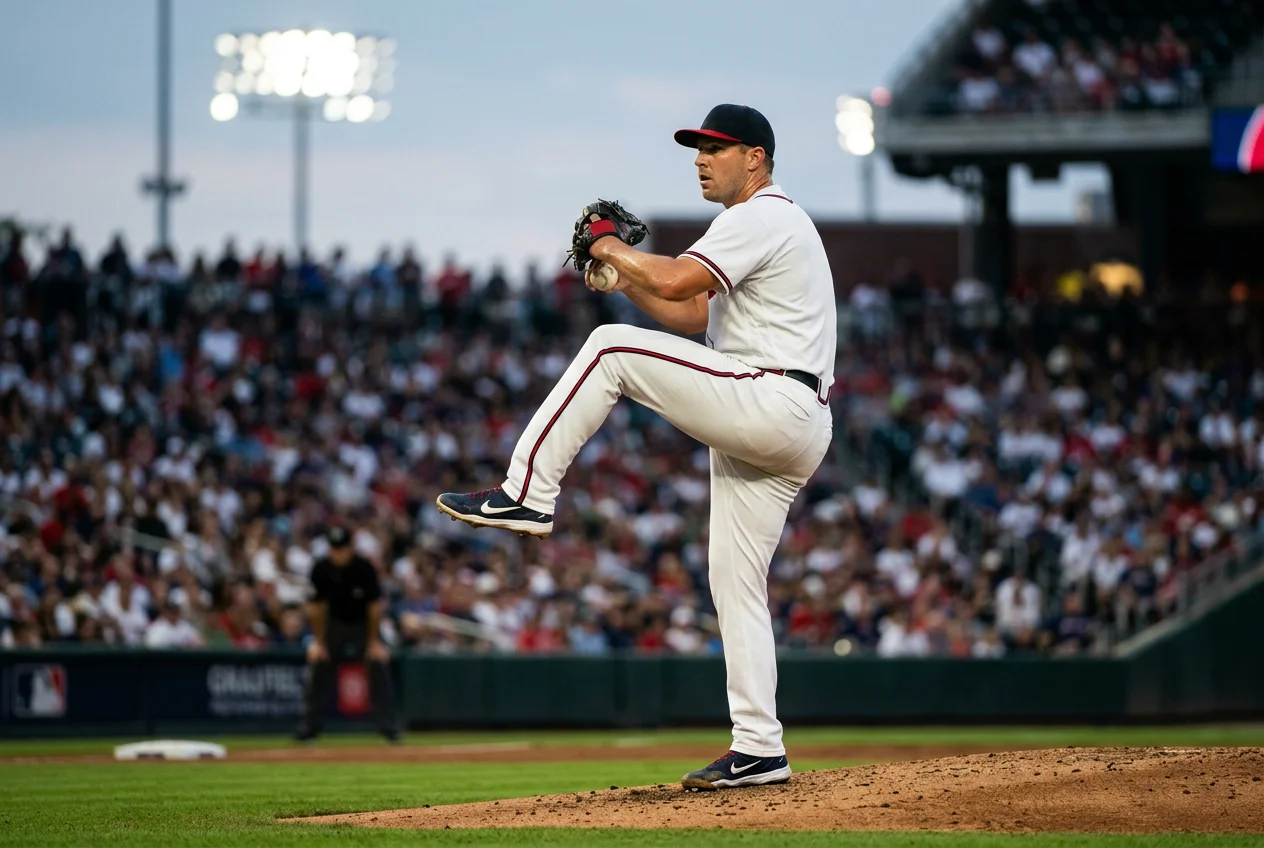
Rest and workload also factor heavily into pitcher evaluation. A starter on five days' rest after a light outing presents differently than the same pitcher on four days' rest following 110 pitches. Bullpen usage in recent games affects how deep a starter needs to go, which impacts pitch counts and late-inning effectiveness. These contextual factors don't show up in season-long statistics but significantly influence single-game outcomes.
Lineup and Matchup Considerations
Starting pitching gets the headlines, but lineup construction often determines the actual betting value. A pitcher's season stats mean less when facing a lineup stacked with hitters who historically crush his pitch mix.
Platoon splits are the starting point. A left-handed starter facing a lineup that struggles against southpaws has an inherent advantage the line may not fully reflect. I track how teams perform against lefties versus righties over rolling 30-day windows - recent performance often matters more than season-long averages because lineup construction changes throughout the year.
Rest patterns affect hitting as much as pitching. Teams playing their fourth game in four days, especially after travel, show measurably worse offensive production. The difference isn't dramatic - maybe 0.3 runs per game on average - but in a sport where half-run movements shift odds significantly, these factors add up.
Late-season lineup considerations become increasingly important. Contending teams often protect key players with rest days in September, while eliminated teams might call up prospects who lack major league experience. The lineup that took the field in June may look substantially different by Labor Day, and betting markets don't always adjust quickly to these changes.
Ballpark factors interact with lineup composition in predictable ways. A fly ball-heavy lineup visiting a pitcher-friendly park with deep dimensions faces a harder task than their season numbers suggest. Conversely, a team built around gap-to-gap contact hitters can exploit spacious outfields that might limit home run-dependent offenses. These interactions between team construction and environment are where careful analysis creates separation from the betting public.
Types of Baseball Bets Explained
My first year betting baseball, I only knew moneylines existed. Took me embarrassingly long to realize I was leaving value on the table by ignoring other markets. Each bet type has its place in a complete baseball betting approach - the key is understanding when each makes sense.
Baseball offers more betting diversity than most recreational bettors realize. Beyond the standard game lines, props have exploded in popularity - 73% of sports bettors now participate in prop markets according to recent surveys. That growth reflects both increased availability and the appeal of betting on specific player performances rather than full-game outcomes.
The sections below provide an overview of each major bet type. For detailed strategies and advanced analysis, dedicated guides go much deeper into each category.
Moneyline Betting Basics
The moneyline is baseball betting at its most fundamental: pick the winner. No spread to cover, no total to hit - just determine which team wins the game. That simplicity makes it the entry point for most bettors, but don't mistake straightforward for easy.
Baseball moneylines center on starting pitching more than any other factor. When an ace faces a back-end rotation arm, the line reflects that mismatch through price. A -180 favorite implies roughly 64% win probability - you're betting $180 to win $100. Whether that price represents value depends entirely on your assessment of the true probability.
The moneyline-centric nature of baseball creates profit opportunities that don't exist in spread-based sports. You can be profitable hitting 45% of your bets if you're consistently finding plus-money underdogs at the right price. Conversely, a bettor who wins 55% of their wagers can still lose money if they're constantly laying -200 or higher. For a comprehensive breakdown of moneyline strategy, the complete guide to MLB moneyline picks covers everything from reading odds to identifying value situations.
Run Line Fundamentals
The run line brings point spread mechanics to baseball. The standard spread is 1.5 runs - favorites need to win by 2 or more, while underdogs cover by winning outright or losing by exactly one run.
That fixed spread creates interesting dynamics. Heavy favorites at -200 on the moneyline might be -120 on the run line, dramatically improving the price if you believe they'll win comfortably. Meanwhile, run line underdogs at plus-money can essentially give you two ways to win - take the upset or keep it close.
The run line becomes particularly relevant in games featuring elite pitching. When runs are scarce, one-run games become more common, which benefits underdogs getting the 1.5 runs. Conversely, high-powered offenses facing weak pitching create run line favorite value in potential blowouts. For complete run line mechanics and strategy, the MLB run line picks guide provides detailed coverage.
Over/Under Totals
Totals betting removes team loyalty from the equation. You're simply determining whether the combined runs scored will exceed or fall short of a set number. That shift in focus opens up a different analytical approach centered on scoring environment rather than which team is better.
Weather dominates totals analysis in ways that moneyline and run line bettors can often ignore. Wind blowing out at Wrigley Field adds runs. Wind blowing in at the same park suppresses scoring. Temperature, humidity, and air density all affect ball flight - and by extension, total runs scored.
Ballpark dimensions matter enormously. A total of 8.5 runs means something very different in Colorado's thin air compared to San Francisco's cavernous outfield. The MLB over under picks resource explores these environmental factors alongside pitching and lineup considerations.
Player Props Introduction
Player props let you isolate individual performance from game outcomes. A pitcher's strikeout total, a hitter's total bases, whether a slugger goes deep - these markets have their own dynamics independent of which team wins.
The appeal is obvious. You might like a pitcher but not want to back his team. Props let you bet on that starter to rack up 7 or more strikeouts regardless of run support. Similarly, you can fade an offense without needing the opposing team to win - bet the under on their cleanup hitter's total bases and let the chips fall where they may.
Props require more granular research. Batter-versus-pitcher history, platoon splits against the day's specific opponent, home versus road performance patterns. The data exists, but synthesizing it requires time. The player props guide covers the research process and identifies high-value prop categories.
NRFI/YRFI Quick Guide
NRFI - No Run First Inning - and its counterpart YRFI have carved out a substantial niche in baseball betting. These bets settle quickly, the analysis is relatively contained, and they offer something different from full-game wagers.
The concept is straightforward. NRFI means neither team scores in the first inning. YRFI means at least one run crosses the plate before the second inning begins. Typical NRFI odds range from -110 to -130, with prices improving when elite pitchers who suppress early offense face off.
During the regular season, 10-15 NRFI markets are available daily. The sheer volume creates opportunities but also demands discipline. Two dominant starters with high strikeout rates against patient lineups create ideal NRFI spots. Conversely, volatile starters who walk batters early or face aggressive first-pitch hitting lineups tilt toward YRFI. The NRFI picks guide breaks down the evaluation framework for both sides of this market.
Finding Value in Daily MLB Picks
A friend once asked me why I passed on betting a game where "the better team" was a small favorite. My answer confused him at first: I agreed Team A was better, but the line didn't offer value. Being right about who wins means nothing if you're paying too high a price to find out.
Value in baseball betting is the gap between what odds imply and what you believe the true probability to be. If a team's line suggests 45% win probability but your analysis shows 52%, you've identified value - even if that team loses more often than it wins. Over hundreds of bets, consistently finding these edges produces positive results regardless of any individual game's outcome.
The concept sounds simple but requires intellectual honesty most bettors lack. You need to separate your probability assessments from outcomes. A bet that loses can still have been correct if your reasoning was sound. A winning bet at terrible odds was still a mistake you got away with. This mindset shift from outcomes to process is what distinguishes recreational bettors from those with staying power.
Live betting now accounts for over 62% of sports wagering volume, which has changed how value emerges. Lines move faster, information gets priced in quicker, and windows of opportunity shrink. But that efficiency creates its own inefficiencies. When everyone is watching the same data feeds, the bettors doing deeper work - understanding why a starter's velocity is down or recognizing bullpen fatigue patterns - gain an edge that live market speed can't eliminate.
I categorize my confidence levels based on how many factors align:
High Confidence: Three or more factors strongly support the position. Example: elite starter at home against lineup that struggles with his pitch mix, at favorable odds.
Medium Confidence: Two factors support with no significant negatives. Example: solid pitcher with rest advantage, but lineup matchup is neutral.
Value Play: Single strong factor at exceptional odds. Example: bullpen game for favorite creates underdog value despite even matchup otherwise.

Most baseball bet of the day selections fall into the high confidence category - that's the whole point of waiting for the best spot rather than forcing action. But occasionally a value play offers expected value that can't be ignored. The discipline is knowing the difference and sizing bets accordingly.
Practical value identification starts with comparing your projections to market lines. If you've evaluated a game and estimate Team A wins 56% of the time, check what the market implies. A -120 line implies about 54.5% win probability - that's a thin edge but an edge nonetheless. A -150 line implies 60% and represents negative expected value despite being the better team.
The math isn't complex, but doing it consistently requires systems. I maintain a simple spreadsheet that logs my pre-game probability assessments alongside actual lines. Over time, patterns emerge: markets I consistently evaluate better than the lines, bet types where my edge is strongest, and spots where I systematically overestimate or underestimate.
Bankroll Management for Baseball Bettors
The ugliest stretch of my betting career wasn't bad picks - it was good picks with terrible sizing. Three losses in a row, each larger than the last as I chased back the previous day's damage. By Friday I'd wiped out two months of careful work. That was the lesson that finally taught me bankroll management isn't optional.
Betting on baseball can be profitable, but the foundation has to be disciplined: set a budget, stick to it, and don't chase losses. Bet smart, not reckless. That advice sounds obvious, but the statistics suggest most bettors ignore it. 25% of bettors have skipped bill payments due to gambling. 30% carry debts they attribute directly to betting. These aren't cautionary tales about problem gambling necessarily - many are simply people who never established proper bankroll practices.
The baseline approach is unit-based betting. Your bankroll is the total amount you've allocated to sports betting - money you can afford to lose without affecting your life. A unit typically represents 1-2% of that bankroll. If you have $5,000 to bet with, a unit might be $50-100. Every bet gets sized in units rather than arbitrary dollar amounts.
This framework forces proportional betting. As your bankroll grows, unit sizes increase gradually. During drawdowns, unit sizes decrease, protecting your capital during cold streaks. The approach removes emotion from sizing decisions - you're not trying to win back yesterday's losses with one bigger bet.
For the baseball bet of the day approach specifically, I recommend a tiered system:
- Standard unit (1U): Default size for value plays and medium confidence positions
- Strong play (1.5U): High confidence spots where multiple factors align
- Maximum bet (2U): Reserved for rare occasions when everything lines up - maybe 2-3 times per month

Notice what's missing: there's no half-unit for "I kind of like this but I'm not sure" plays. Those shouldn't be bet at all. The discipline of limiting yourself to one primary pick daily already filters out marginal spots. Your remaining selections should merit at least a full unit or they shouldn't be plays.
Baseball's 162-game season tests bankroll discipline more than football's 17-game NFL schedule. Losing weeks happen - I've had stretches of 10+ days underwater. The variance is real and unavoidable. What determines long-term outcomes is whether you emerge from those stretches with enough bankroll to capitalize when positive variance arrives. That only happens if you've sized bets appropriately throughout.
Detailed bankroll strategies, including formula-based approaches like the Kelly Criterion and adjustments for different risk tolerances, deserve their own treatment. The MLB bankroll management guide covers these methods in depth.
Essential Tools and Data Sources
I spent my first few years betting baseball with boxscores and gut feeling. Results were predictably mediocre. The improvement came when I started treating analysis as actual work - systematic, data-driven, repeatable. Here are the tools that form the core of my daily process.
Advanced pitching metrics live on FanGraphs and Baseball Savant. These sites should be bookmarked and checked before every betting decision. FanGraphs provides FIP, xFIP, and situational splits in clean tables that make comparison easy. Baseball Savant offers Statcast data - exit velocities, spin rates, expected stats based on contact quality. Between them, you have everything needed to evaluate whether a pitcher's results reflect skill or luck.
Lineup information comes from official team sources and aggregators. Starting pitchers are typically announced 1-2 days ahead, but lineup cards drop much closer to game time - usually 2-3 hours before first pitch for day games, sometimes later for night contests. Any platform tracking real-time lineup announcements works here. The key is waiting for confirmation rather than assuming yesterday's order holds.
Weather data matters more for baseball than any other major sport. Wind speed and direction, temperature, humidity - all affect ball flight and run scoring. General forecasts aren't sufficient. You need game-time conditions at the specific ballpark, ideally with wind direction relative to the field orientation. Several specialty sites provide this information formatted for betting purposes.
Odds comparison across multiple sportsbooks is non-negotiable. A game might be -115 at one book and -105 at another - that 10-cent difference compounds massively over hundreds of bets. Maintaining accounts at multiple legal sportsbooks and checking lines before placing any bet is standard practice for anyone serious about results.
Tracking your own results provides the most important data of all. Every bet logged with your pre-game probability assessment, the actual line, the outcome, and brief reasoning. This record enables honest evaluation - are you finding value where you think you are? Which bet types perform best? Where do systematic errors appear? Without tracking, you're relying on memory and narrative, both of which deceive us about our actual performance.
For those interested in developing a complete baseball betting strategy, these tools are the foundation. The information advantage doesn't come from access - these resources are available to everyone. It comes from consistently using them when recreational bettors don't bother.
Responsible Betting Practices
I don't include this section because regulations require it. I include it because I've watched talented handicappers destroy their finances - and worse - by losing control. The same analytical skills that identify betting value can rationalize chasing losses. The same confidence that helps you trust your process can become delusion when losses mount.
The scale of sports betting growth brings this conversation into sharper focus. Cait Huble, Director of Public Affairs for the National Council on Problem Gambling, describes current conditions as the largest and fastest explosion of gambling the country has ever seen. About 4.2 million Americans struggle with gambling-related problems. Among regular bettors, 8.7% meet clinical criteria for gambling disorder - a figure that's risen 2.3 percentage points over five years.
These statistics aren't meant to scare you away from betting. Millions of people wager responsibly and enjoyably. But the statistics exist, and ignoring them helps no one. The National Council on Problem Gambling's Board President, Derek Longmeier, acknowledges that nationwide responsible gambling efforts are making positive impact, but emphasizes the work is far from over. Problem gambling needs to be embedded into broader public health infrastructure.
For individual bettors, responsible practices are practical, not preachy:
- Separate betting funds from living expenses. Your bankroll should be money that, if lost entirely, wouldn't affect rent, bills, or savings.
- Set time limits alongside money limits. Hours spent researching and watching games can become its own problem even when bet sizes stay controlled.
- Never bet to recover losses. The next bet should be evaluated on its own merits, not as a vehicle to get even.
- Take breaks after big wins too. Overconfidence after a heater leads to sloppy decisions just as chasing losses does.
- Recognize warning signs honestly. Lying about betting activity, betting money needed for other purposes, inability to stop when planned - these patterns demand attention.
Every legal sportsbook offers self-exclusion programs and deposit limits. These tools exist because the industry knows some customers need them. Using them isn't weakness - it's the same discipline that makes good bettors successful in the first place. If you recognize problematic patterns in yourself, the National Council on Problem Gambling provides resources at 1-800-522-4700.
Frequently Asked Questions
What is the best bet of the day in baseball?
The best bet of the day varies based on each slate's matchups, but certain characteristics remain consistent. You're looking for games where starting pitching matchups create value, where lineup construction favors one side, and where the odds don't fully reflect these advantages. A dominant starter at home against a lineup that struggles with his pitch type, at reasonable odds, exemplifies a strong daily pick. The key is waiting for situations where multiple factors align rather than forcing action on every game.
How do I find value in MLB betting?
Value exists when your assessed probability of an outcome exceeds what the odds imply. To find it consistently, develop independent assessments before checking lines. Evaluate starting pitchers using metrics like FIP and xERA rather than ERA alone. Consider lineup matchups, rest patterns, and ballpark factors. Then compare your probability estimate to the market. If you believe a team wins 55% of the time and the line implies 50%, that's value. The process requires honest self-assessment and willingness to pass on games where value doesn't exist.
What is a run line bet in baseball?
The run line is baseball's point spread, standardized at 1.5 runs. Betting the favorite at -1.5 means they must win by 2 or more runs for your bet to cash. Betting the underdog at +1.5 means they can win outright or lose by exactly one run and you still win. Run lines offer different value propositions than moneylines - heavy favorites become more attractive when you're getting better prices for run line victories, while underdogs getting 1.5 runs essentially have two ways to cover.
What is NRFI/YRFI betting in baseball?
NRFI stands for No Run First Inning - a bet that neither team scores before the first inning ends. YRFI is the opposite, betting that at least one run scores in the opening frame. These markets settle quickly and depend heavily on starting pitcher tendencies. Starters with high strikeout rates and low walk rates favor NRFI, particularly against patient lineups. Pitchers who struggle early or face aggressive first-pitch hitters tilt toward YRFI. The typical NRFI odds range from -110 to -130, improving when elite pitchers face off.
How important is the starting pitcher for MLB betting?
Critically important - starting pitchers influence lines more than any other single factor in baseball. A team's odds can shift 30-40 cents or more based solely on who's pitching. The starter typically works 5-6 innings, directly controlling half or more of the game's critical at-bats. Advanced metrics like FIP and xERA reveal true performance better than ERA, helping identify starters whose talent exceeds their results or vice versa. For any baseball bet, the pitching matchup should be the first thing you evaluate.
What factors should I consider before placing a baseball bet?
Start with starting pitchers - evaluate their recent form, relevant metrics, and historical performance against the opposing lineup. Check lineup confirmations, as rest days for key hitters significantly affect run production. Consider ballpark and weather conditions, especially wind direction for totals. Review rest patterns for both teams, including bullpen usage in recent games. Finally, compare available odds across multiple sportsbooks to ensure you're getting the best price. Only after evaluating all these factors should you assess whether value exists at the available odds.
How does bankroll management work in baseball betting?
Bankroll management means betting a consistent percentage of your total betting funds rather than arbitrary amounts. Most serious bettors use a unit system where one unit represents 1-2% of their bankroll. A standard bet might be one unit, with strong plays at 1.5 units and rare maximum bets at 2 units. This approach automatically adjusts bet sizes as your bankroll grows or shrinks, protecting capital during losing streaks and allowing growth during winning periods. The discipline prevents the emotional betting - chasing losses, oversizing after wins - that destroys most recreational bettors.
Making Smarter Baseball Bets Every Day
Nine years of MLB betting has taught me that consistency matters more than brilliance. The bettor who methodically evaluates every game, waits for genuine value, and maintains disciplined bankroll practices will outperform the sharp who makes impulsive decisions between flashes of insight. Baseball rewards patience because the season is long enough for process to overcome variance.
The baseball bet of the day philosophy isn't about finding hidden secrets. It's about doing the work that most bettors skip. Evaluate pitching matchups beyond surface stats. Confirm lineups before betting. Check weather conditions. Compare odds across multiple books. Track your results honestly. These habits aren't glamorous, but they compound over 2,430 regular season games into meaningful edge.
Start with one bet per day. Build your process. Track everything. The goal isn't to prove you're smarter than the market - it's to consistently find the small edges that exist and exploit them systematically. That's how $1,200 first-month disasters turn into sustainable, enjoyable engagement with the sport.
The frameworks in this guide provide the foundation. The dedicated resources linked throughout offer depth on specific bet types and strategies. What matters most is applying this knowledge with discipline, day after day, through winning streaks and losing stretches alike. That's the real baseball bet of the day: betting on your own ability to stay disciplined when it matters.
Articles
Written by the editors at Baseball Bet of the Day.
